Showing posts with label reviews. Show all posts

Sunday, 6 December 2009

Withnail & I, with extra Shakespeare


 I have of late - but wherefore I know not - lost all my mirth, forgone all custom of exercises; and indeed it goes so heavily with my disposition that this goodly frame, the earth, seems to me a sterile promontory, this most excellent canopy, the air, look you, this brave o’erhanging firmament, this majestical roof fretted with golden fire, why, it appears no other thing to me but a foul and pestilent congregation of vapours. What piece of work is a man! How noble in reason, how infinite in faculty, in form and moving how express and admirable, in action how like an angel, in apprehension how like a god - the beauty of the world, the paragon of animals! And yet, to me, what is this quintessence of dust? Man delights not me, no, nor woman neither, though by your smiling you seem to say so.

Hamlet, Act 2, Scene 2

She should have died hereafter;
There would have been a time for such a word.
Tomorrow, and tomorrow, and tomorrow,
Creeps in this petty pace from day to day
To the last syllable of recorded time;
And all our yesterdays have lighted fools
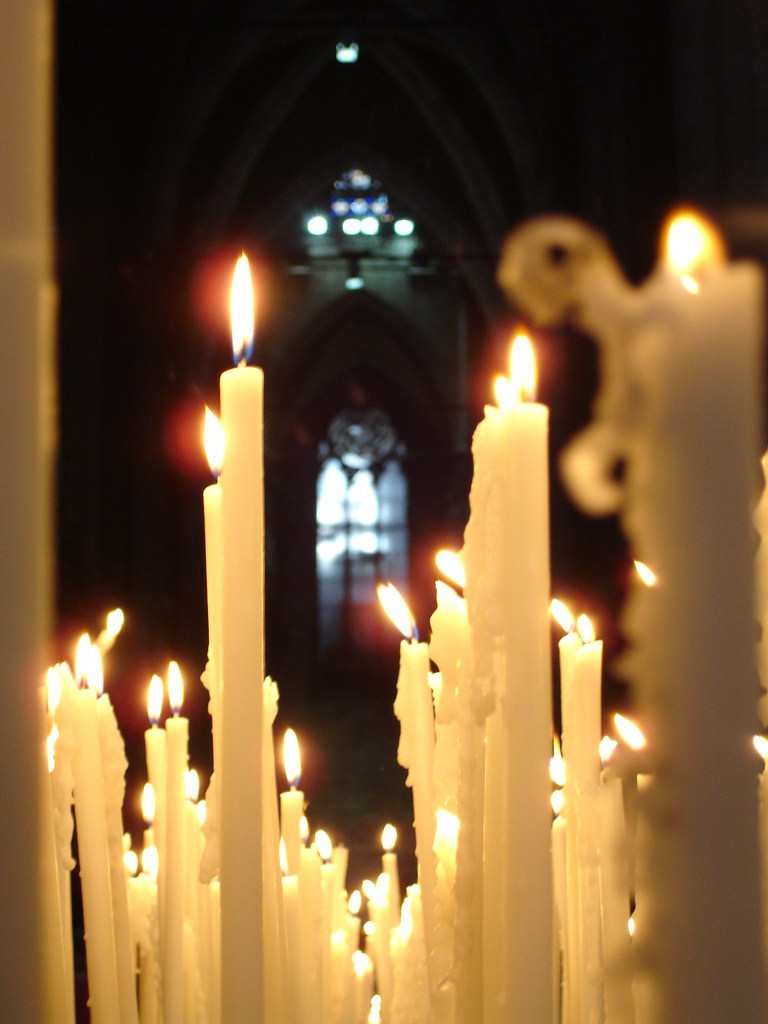
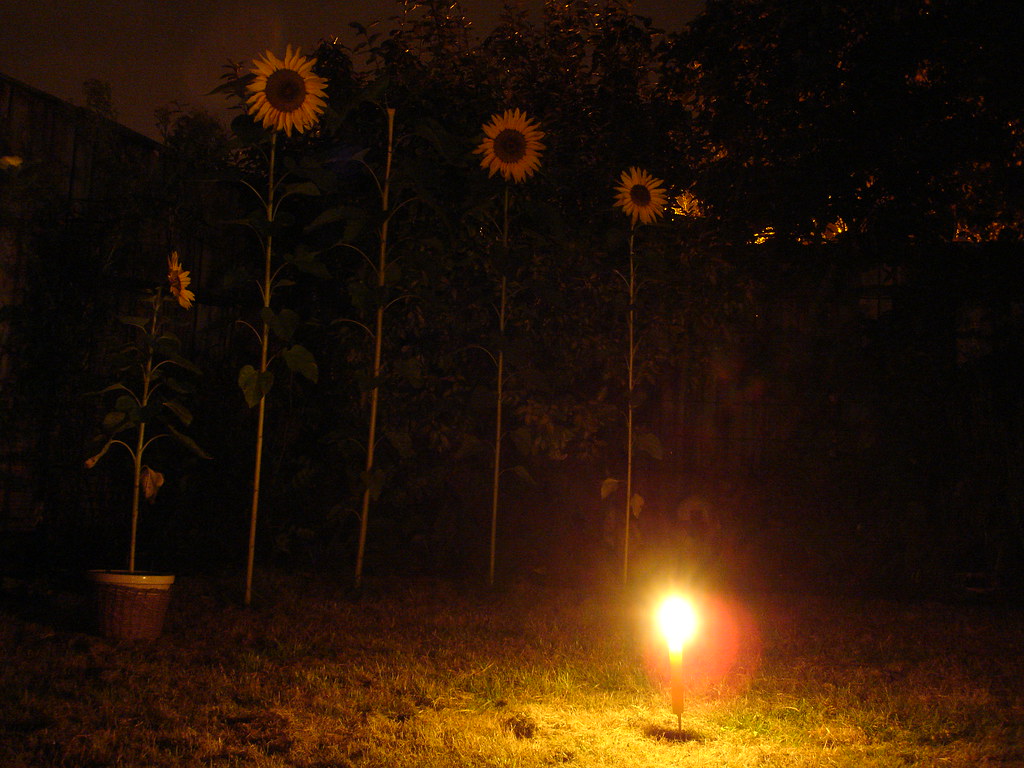
The way to dusty death. Out, out, brief candle!
Life’s but a walking shadow, a poor player
That struts and frets his hour upon the stage,
And then is heard no more; it is a tale
Told by an idiot, full of sound and fury,
Signifying nothing.

Macbeth, Act 5, Scene 5

I've been watching Withnail & I. I don't know what to make of it, though I think that's a traditional reaction to that film. I spent most of the film feeling sorry for Monty, and for Marwood ('...& I'), though obviously it's Withnail you watch. It doesn't tell you enough. There's more story. One shouldn't feel sorry for any of the characters - one shouldn't like them, because one can see that there is a lot of less likeable stuff in them that is barely shown. You know that Marwood is junkie enough for paranoia, you know that Monty is predatory - you know that Withnail could be respected as talented man and certainly one with character and courage. In some ways he would have been redeemed had they chosen to finish the film the way I think the book does, with his suicide. His decision to die would have validated him and credited him with some integrity. The film is like a Beckett play, but with more context than one ever gets from those. Absurdist.

The Hamlet quotation, above, ends the film. I have always remembered the image as 'stellar promontory' rather than 'sterile'. I think the former concept would probably be an impossible one for Shakespeare to come up with - his was still a period that believed in the spheres of the heavens rather than understanding the universe as orbs floating in a void as we do now. For him, the most desolate place imaginable was a spur of headland flung far out into the sea, weather-swept and on which nothing was able to survive. To me, from the vantage point of a new millennium, it seems more appropriate when looking for true sterility to conjure up a rock in space, totally dead, totally barren, totally cold, projected into nowhere, anchorless, helpless, dust among the stars. The feeling is the same, but as the world has become a smaller place since the C17th, so the universe has got larger and our place in it has become infinitely less significant; after all we no longer believe, for the most part, that the world was created by a beneficent entity purely for us.  Shifting from the terrestrial to the universal seems appropriate, with that shift in context.  Anywhere on earth is not remote, not really.  Anywhere in space - is.  I sort of hope that Shakespeare wouldn't mind too much my mis-rememberance of his line, because from my moment of history my image can go some way towards re-investing his with the power that 400 years has leached from it.

The Macbeth quotation is mostly there because it is probably my favourite piece of Shakespeare to say aloud. It follows almost naturally from the Hamlet speech, though the art in it is greater as might be expected from the one in metre and the other in prose. Both deal with isolation and desolation and the insignificance of man in the face of time and situation. Macbeth is over-dramatic (and over-quoted and almost hackneyed, now) but the image of 'all our yesterdays have lighted fools/ The way to dusty death' is speaking - each of us guides each other, a day at a time, towards each individual's death. Shakespeare expresses both the futility and the camaraderie of the human experience in the space of ten words. We are reminded how hopeless our lives are, but also that we are all in it together and we have little but one another. It's arguably an odd sentiment from the character of Macbeth, but ultimate poetry.

Monday, 30 November 2009

Lighthousekeeping


     It was a long story, and like most of the stories in the world, never finished.  There was an ending - there always is - but the story went on past the ending - it always does.

(...)

Pew - why didn't my mother marry my father?

She never had time.  he came and went.
Why didn't Babel Dark marry Molly?
He doubted her.  You must never doubt the one you love.
But they might not be telling you the truth.
Never mind that.  You tell them the truth.
What do you mean?
You can't be another person's honesty, child, but you can be your own.
So what should I say?
When?
When I love someone?
You should say it.

(...)

     There is is; the light across the water.  Your story.  Mine.  His.  It has to be seen to be believed.  And it has to be heard.  In the endless babble of narrative, in spite of the daily noise, the story waits to be heard.
     Some people say that the best stories have no words.  They weren't brought up to Lighthousekeeping. It is true that words drops away, and that the important things are often left unsaid.  The important things are learned in faces, in gestures, not in our locked tongues.  The true things are too big or too small, or in any case always the wrong size to fit the template called language.
I know that.  But I know something else too, because I was brought up to Lighthousekeeping.  Turn down the daily noise and at first there is the relief of silence.  And then, very quietly, as quiet as light, meaning returns.  Words are the part of silence that can be spoken.

(...)

     I copied the stories out as fast as I could, but all I had so far were endless beginnings.

(...)

     The rest of my life.  I have never rested, always run, run so fast that the sun can't make a shadow.  Well, here I am - mid-way, lost in a dark wood - this selva oscura, without a torch, a guide, or even a bird.

(...)

     'Do you know the story of Jekyll and Hyde?'
     'Of course.'
     'Well then - to avoid either extreme, it is necessary to find all the lives in between.'

(...)

     'What did you do before this?'
     'I was married.  Then I wasn't married any more.  Tipped up, flung out, recognise that?'
     I did.
     'End of story.  Gotta start again.  Gotta be positive.  Gotta move on.  Don't look back.  No regrets.'

     That's how he said it.  He said it like a mantra.  I wonder how many times a day he had to say it to make it true?  It was a poultice over his heart.

     I don't know how to poultice my heart.

(...)

     After the Talking Bird, the nice man at the Tavistock Clinic kept asking me why I stole books and birds, though I had only ever stolen one of each.
     I told him it was about meaning, and he suggested, very politely, that might be a kind of psychosis.
     'You think that meaning is psychosis?'
     'An obsession with meaning, at the expense of the ordinary shape of life, might be understood as psychosis, yes.'
     'I do not accept that life has an ordinary shape, or that there is anything ordinary about life at all.  We make it ordinary, but it is not.'
     He twiddled his pencil.  His nails were very clean.
     'I am  only asking questions.'
     'So am I.'
     There was a pause.
     I said, 'How would you define psychosis?'
     He wrote on a piece of paper with his pencil: Psychosis: out of touch with reality.
     Since then, I have been trying to find out what reality is, so that I can touch it.'

(...)

     In the morning I was woken early by the chromatic bell of the Orthodox Church.
     I unlatched the shutters.  The light was as intense as a love affair.  I was blinded, delighted, not just because it was warm and wonderful, but because nature measures nothing.  Nobody needs this much sunlight.  Nobody needs droughts, volcanoes, monsoons, tornadoes either, but we get them, because our world is as extravagant as a world can be.  We are the ones obsessed by measurement.  The world just pours it out.

(...)

     What should I do about the wild and the tame?  The wild heart that wants to be free, and the tame heart that wants to come home.  I  want to be held.  I don't want you to come too close.  I want you to scoop me up and bring me home at nights.  I don't want to tell you where I am.  I want to keep a place among the rocks where no one can find me.  I want to be with you.

     I used to be a hopeless romantic.  I am still a hopeless romantic.  I used to believe that love was the highest value.  I still believe that love is the highest value.  I don't expect to be happy.  I don't imagine that I will find love, whatever that means, or that if I do find it, it will make me happy.  I don't think of love as the answer or the solution.  I think of love as a force of nature - as strong as the sun, as necessary, as impersonal, as gigantic, as impossible, as scorching as it is warming, as drought-making as it is life-giving.  And when it burns out, the planet dies.
     My little orbit of life circles love.  I daren't get any closer.  I'm not a mystic seeking final communion.  I don't go out without SPF 15.  I protect myself.
     But today, when the sun is everywhere, and everything solid is nothing but its own shadow, I know that the real things in life, the things I remember, the things I turn over in my hands, are not houses, bank accounts, prizes or promotions.  What I remember is love - all love - love of this dirt road, this sunrise, a day by the river, the stranger I met in a café.  Myself, even, which is the hardest thing of all to love, because love and selfishness are not the same thing.  It is easy to be selfish.  It is hard to love who I am.  No wonder I am surprised if you do.

From Lighthousekeeping by Jeanette Winterson, first published in 2004 by Fourth Estate

This is a book about love, what it is how it is where it is.  She is best at that.  As a novel, it's uncomfortable, or unconventional, or both.  Like Oranges, which I found a more complete read in its way because it is more coherent and the story itself is less a cipher than this one it, it is philosophical.  It is episodic, with the plot-story broken up by an outside sequence of images and with reflective passages.  The thing I like about both of them is how honest they feel.  One shouldn't usually read the author into a novel, but the direct nature of the first person narrative and the tangible emotions of the speaker almost force you to in this one.  Details like the age of Silver, born in 1959 in Winterson's own birth year, invite parallels that are hard to throw off.  I'm not looking for a connection with an author through a work, but I love it when I find it, provided it is done well.  You are reading a story, and then you are almost reading a letter hidden for you personally among the pages - it's that once-removed connection that I joy on finding in these novels.  The feeling of being spoken to, included, important, valued, worth talking to.  There is great poetry and great thinking and not insignificant plots and characters behind both Oranges and Lighthousekeeping, and differently behind Sexing the Cherry, which didn't draw me into itself in the same way that the other two did though I think that is to do with its subject matter being removed from my personal habitual preoccupations, but I think that I have identified why I finish them and turn them over to start again - because when someone writes you an honest, clear, direct, heartfelt, emotional letter, when someone opens themselves like that to you and makes you feel like the recipient of a gift of themselves, you start again.  I have a series of half-composed replies in my mind.  Part of me is tempted to write them, just to see what coalesces from them.  Maybe even send one, you never know.  Does the honesty in her novels imply that she is receptive to it from others?  And what is the worst that could happen?  No reply and she assumes I'm a little batty.  Which, let's face it, I am, but still.  Knowing my luck, she'd think that and then I'd actually meet her...  Pipe dreams.

Wednesday, 22 August 2007

Short Fringe, and other stories.


DSC00159-1.JPG
Originally uploaded by hazelsheard
Edinburgh was fun. Fish and I drove up on Friday night, eventually, after I persuaded him to stop working for any length of time. Even then, he drove and did a conference call at the same time, despite the fact that he had me next to him insured and ready to drive his car for him so that he COULD work. I'm insured on his car for a whole year, because it cost a pound more to do that than to ensure me for a few days. This will mean that during Minack in Cornwall next month, I will have the choice of five cars to drive. Comedy.

We got there about 12:30 on Friday night/Saturday morning, and kicked off early the next day. Stuff bullet pointed is show reviews, the rest is 'stuff I did'...

  • Carl, Christian (also known as Fish, for those that don't know), Nikki (randomer loosely associated with Carl/EUSOG), and I went to see Little Red Things: The Boy Who Wouldn't Listen, by Gomito at Bedlam to begin with. Carl and I always see the Gomito show when up, and this was its last day. They're a great company, with fantastic physical work and magical storytelling. The whole experience is usually one of delight in what they're doing in front of you, and it's regularly my highlight of the festival. This year was not disappointing from that point of view, but I felt that they hadn't been as imaginative as they have been in the past. The show was a sequel to last year's sell out Little Red Things, and that allowed them to do more of the same, rather than thinking further and showing us new things. It was still good, but I was slightly disappointed by that.
  • We followed up Little Red Things with The Quest for the Divine Bottle, a piece put together in association with Gomito (there's a link to the Divine Bottle page from the Gomito link above) and based on the work of Rabelais. He was a particularly dirty French medieval monk, and this gave the group plenty to work with. I actually preferred this show to LRT in many ways, because it had the freshness and strangeness that I look for in a piece of theatre, continually making you see everyday things in a different way. The plot did certainly, as Fish puts it, lack cohesion. It felt very dreamlike though, jumping about from line to line and being difficult to follow, and I felt that that was no bad thing. Less polished, perhaps, than the previous, but still thoroughly entertaining.
  • I wandered over to PGP to catch up after that, and saw Melancholia by the Latino Theater Company. The stagecraft was excellent, and I was thoroughly engaged by that aspect of their work. However, the bare anti-war agenda of the play was a little annoying after a while - it was aimed explicitly at the Iraq war, which might be fair enough, but just saying 'war is bad' is not really profound enough these days, especially at the Fringe. It lost marks for being slightly trite, and n0t recognising, for example, that Iraq is different from any other theatre of conflict.
  • Sweeney Todd was next up. This was a Cambridge show I'd been planning on seeing for ages anyway - it's by Fitz Theatre (and Sondheim), who seem to have a holding site instead of a website...job for you, Hugh? It was good, don't misunderstand the following - I think I judge musicals more harshly than other things. The music has to be spectacular, as does the singing and the acting in order for me to really enjoy it. These guys did great, and I could see why so many people were saying it was fantastic, but it didn't completely bowl me over. Reasons for this included the lack of full orchestration that meant that some of the texture was lost, dodgy high notes partly due to the fact that it was last night, and a Joanna who needs 6 months of lessons after which time she'll have a voice blended across the registers. She was good, but missed out on being REALLY good.
  • Rounding off the day was Jesus: The Guantanamo Years by (Elaine's ex) Abie at the Underbelly. I was knackered by this time, and Fish and I were both pretty drenched, so I was not in the most receptive of moods when we went to sit down in the steamy damp cave that passes for a theatrical venue to the Underbelly (I LOVE the Underbelly). However, the writing in this was fantastic. The general premise is that Jesus returns to the stand up scene after 2000 years and tries to get past US security, as well as moaning about the Monty Python spin off. He's a bearded Middle Eastern guy prepared to die as a martyr, and is convinced that his mission is a holy one. Ends up in Guantanamo, strangely. Very well observed and very well put together - what you'd expect from someone who makes his living mostly as a journalist. Prevented only from being my pick of the Fringe by the fact that Abie is not a performer, I don't think. What was needed was for the audience to believe in the character they were watching, rather than just laughing at and being enlightened by what he was saying. It was a shame, that. All the same, thoroughly entertaining, and I was in a much less horrid mood when it was finished than I was when it started.

This concluded Saturday, and we'd made good inroads into the weekend's shows. I only saw two shows on Sunday, preferring to laze, chat, get fed by relatives and get drunk with the PGP/EUSOG crowds.
  • The first one I did see was The Gently Progressive Behemoth, again at least loosely Cambridge show, put on by Luke Rogers and Nadia Kamil. They did Staggered Spaces in Greyfriars last year and it was great - silly, poignant, honest comedy. This time, it was mostly silly. Quite fun silly, but definitely not as good as before. We did share the audience with Jimmy Carr though, and as he left he said that it was 'kinda fun' and he had 'had a giggle', so their careers are continuing upwards - they have quotes from Daniel Kitson in response to Staggered Spaces...perhaps I should try and pass that on to them?
  • Then it was time for The Lion, The Witch and The Wardrobe, the floor of whose flat I was sleeping on. I was actually very impressed by this, having gone not really expecting great things from a kids' show with what was considered a bad script. The performances were universally great though, and I really don't think they could have done more with it.
This was my last show for the Sunday, and I had dinner with Uncle Nick, Auntie Alison, Theo and Evelyn afterwards, and tried to introduce them to the Fringe a bit. I then met Fish for a drink before we left for the PGP end of week party at the Bedlam in the company of the EUSOG rabble. Very entertaining. Too many photos on Facebook.

I met Jacqui (Company of Ten old friend) for breakfast at the Elephant House, 'Birthplace of Harry Potter' as it is now, on Monday, and then went to see:
  • Smile and Say Thanks at Bedlam with her. This was a typical Bedlam show; new, sweet, and with a few corners not yet cut off. It was loosely about random acts of kindness, I suppose, each characters telling different stories that eventually came together in interesting ways. Very entertaining and enjoyable for first thing in the morning, though there were definitely bits that could have been cut. They had badges. Always a good deal.

I was going to see the Harry Porter Prizewinner (more Cambridge) play Coat that lunchtime, but was too keen on eating and not rushing around too much that I didn't.

  • I saw Can of Worms instead, which was a play about torture, but very funny and very entertaining performances. I met up with Rachel there, by accident. She's writing a play on contemporary theatre, and I like contemporary theatre a lot, so we tend to run into each other. She felt that, like Melancholia, its message was a bit lacking in depth, which spoiled an otherwise thoroughly excellent piece of theatre. That a piece doesn't have a particularly profound moral does not prevent it being good art unless it has set out to do so - then it fails on its own terms.
  • Next was Mouse; a piece along a similar lines, I guess. It was a monologue, set in a garage where a second, silent character is committing suicide with a car due to the manipulations of the speaker. As an example of its type, it was great. The performance was strong and the story quite interesting. It just wasn't really new - we've all done monologues, and they always go the same way, with the audience discovering more about the character than the character realises. Robert Browning did that to death 150 years ago. Still good, but not new.
Next came dinner with Fish and Mr Linford at the awesome Wannaburger. I love that place...have a look at the menu!

  • My final show of the Fringe this year was Eurobeat. It had a pretty good reputation by the time Fish and I saw it. It's in the Pleasance Grand, one of the biggest venues on the Fringe, and as such it doesn't really feel like fringe theatre. It was supposed to be a spoof of Eurovision, taking the mickey out of that institution. The thing was, Eurovision is universally acknowledged as a really silly event in any case. They didn't take their mick-taking far enough, I think. There were a few more dirty jokes and entertaining mistranslations, but frankly there are actually quite a lot of those in the contest itself. It missed an opportunity to be absolutely hilarious, and instead didn't do much more than just put the Eurovision on stage.

And that was my Fringe, really. Slightly odd to have family up there, but that HAS happened before, even if not since about 2002 when I last did a show. It was nice to get to know Fish as well, as a person and not someone on the other side of a computer screen. I can nearly think of him as a real person and not the goldfish he has as a userpic on MSN now... I was very glad he was there actually, or I'd have spent a lot more time on my own. I don't think I really assisted him in his attempt to work while he was there, but I think I did manage to drag him to some theatre he wouldn't otherwise have seen. I get the impression he's mildly impressed with my dragging him to see Little Red Things straight off, because he keeps hearing people talking about it and saying how good it is, which is quite gratifying. I'm becoming a Fringe veteran though - this was my 6th since 2001. I may well have spent more time in Edinburgh than I have in Cornwall. Weird. Not working was PGP was a bit strange this year, but I did hang around and stuff, which was sort of nice. I even turned up to the brand new kitchen in the bowels of Augustine's and made them lemon cake yesterday morning, just to get the full Fringe experience. And to make myself feel I'd earned the free ticket to Melancholia Jeff gave me half by accident because he thought I was working. Train back was dull, though I was glad I managed to persuade Carl to get my train back. In Cambridge for a couple of nights before the next theatrical adventure starts in Cornwall tomorrow. New cats on Friday! Woohoo! Need to see what can be done about llamas, too...